The urgency to combat climate change has led industries to explore cleaner alternatives to coal. Many have turned to natural gas, believing it to be a low-emission bridge fuel. However, research suggests this switch does little to significantly reduce global emissions. A recent study published in Environmental Research Letters found that methane leaks from natural gas infrastructure could erase any climate benefits of replacing coal. Methane, the primary component of natural gas, has a global warming potential 80 times greater than CO₂ over 20 years. This means that shifting from coal to gas may not be the climate solution many industries hoped for. So, what’s the real alternative? Biomass. Unlike natural gas, it is a renewable, carbon-neutral fuel source that offers authentic, long-term environmental and economic benefits.
The Problem with Natural Gas: A False Climate Solution
Natural gas has been widely marketed as a “cleaner” fuel, but the reality is more complex. While it does produce less CO₂ than coal, it still contributes significantly to global warming.
Methane Leaks Offset Emission Benefits
- Natural gas combustion emits 50% less CO₂ than coal, but methane leaks from extraction, storage, and pipelines negate that benefit.
- A 2022 study estimated that methane leakage rates from natural gas infrastructure range between 3-9%, far exceeding the 1% threshold needed for gas to have any real climate advantage.
- Methane traps 80 times more heat than CO₂, accelerating global warming.
Still a Fossil Fuel with a Finite Supply
- Unlike biomass, natural gas is a non-renewable resource extracted through drilling and fracking—both of which cause environmental damage, groundwater contamination, and even earthquakes.
- Dependence on natural gas also exposes industries to price volatility and supply chain disruptions, as seen during recent geopolitical conflicts.
Biomass vs. Natural Gas: A Performance Comparison
| Feature | Biomass | Natural Gas |
| Carbon Footprint | Near-zero (carbon neutral) | Produces CO₂ and methane emissions |
| Renewable? | Yes, replenishable | No, finite fossil fuel |
| Methane Emissions | None | High methane leakage (3-9%) |
| Energy Security | Locally sourced, reduces import dependency | Often imported, price volatility |
| Long-Term Viability | Sustainable with proper forestry/agriculture | IEA recommends phasing out |
Natural Gas is NOT a Long-Term Climate Solution
- The International Energy Agency (IEA) has stated that if the world wants to reach Net Zero by 2050, new investments in natural gas infrastructure must be phased out.
- Despite being promoted as a “bridge fuel,” natural gas locks industries into fossil fuel dependency, delaying the transition to truly renewable energy sources like biomass.
Why Biomass is the Superior Alternative to Natural Gas
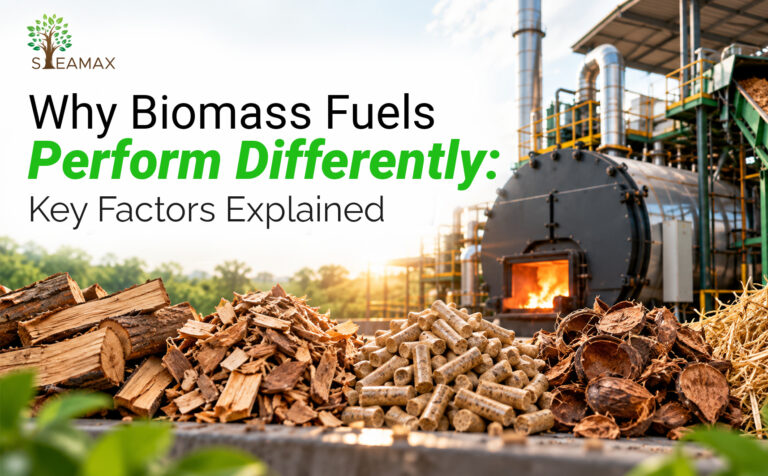
Biomass-derived from wood and wood residue(saw dust pellets), agricultural residues, and dedicated energy crops—offers a genuinely renewable and carbon-neutral solution. Unlike fossil fuels, it can be continuously replenished through sustainable farming and forestry.
Carbon Neutrality
- Biomass combustion releases CO₂, but this is offset by the CO₂ absorbed by plants during their growth cycle, creating a closed carbon loop.
- According to the European Biomass Association, biomass can reduce lifecycle CO₂ emissions by up to 85% compared to coal.
Significant Greenhouse Gas Reduction
- Unlike natural gas, biomass combustion produces zero methane emissions, making it a more reliable option for climate mitigation.
- The U.S. Department of Energy states that switching to biomass can cut greenhouse gas emissions by up to 90% compared to fossil fuels.
Energy Security & Cost Stability
- Biomass is a locally sourced fuel, reducing dependence on imported fossil fuels and minimizing supply chain disruptions.
- Unlike natural gas, which fluctuates in price, biomass provides stable and predictable energy costs, making it ideal for industrial operations.

Steamax Biomass Boilers, Biomass Burners & Astillas Fuel
Steamax’s advanced biomass solutions provide lower emissions, improved efficiency, and energy cost savings, making the switch to biomass easier and more beneficial for industries.
- High-efficiency biomass boilers designed for industrial steam generation.
- Astillas fuel—a patented, low-emission fuel with high combustion efficiency and minimal ash production.
- Retrofitting solutions that allow industries to convert existing fossil fuel boilers to biomass, reducing transition costs.
The Future is Biomass
The science is precise: replacing coal with natural gas does little to fight climate change. Steamax leads the way in biomass-powered energy solutions; industries have a real opportunity to reduce their carbon footprint while improving operational efficiency. It’s time to move beyond fossil fuels and invest in a cleaner, greener future.