If you’re considering switching to biomass for your steam needs, the first question isn’t just what fuel to use — it’s also what boiler design makes the most sense? For decades, industries have relied on two main designs: vertical and horizontal. Both do the same basic job — generating steam — but the way they’re built affects everything from fuel efficiency to floor space, maintenance, and long-term operating costs.
So, which design is better for biomass combustion? Let’s break it down in a straightforward way so you can decide which works best for your plant.
What is a Vertical Boiler?
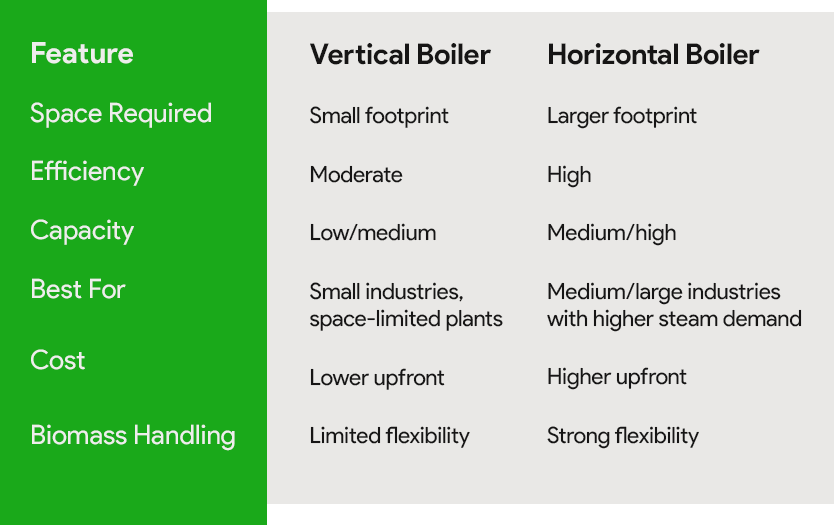
A vertical boiler is compact and upright. The furnace is below, and the steam drum is above. It’s a simple, space-saving design.
Pros of Vertical Boilers
- Small footprint – Ideal for units with limited floor space.
- Lower upfront cost -Typically cheaper than horizontal one.
- Quick installation – Easy to set up in smaller plants.
Cons of Vertical Boilers
- Lower efficiency – shorter flue gas path = less heat transfer.
- Limited steam output – Not suitable for high-capacity industries.
- Maintenance access – Can be harder to clean and service.
What is a Horizontal Boiler?
A horizontal boiler is the more traditional design. The furnace and tubes are aligned horizontally, providing a longer path for flue gases and better heat transfer.
Pros of Horizontal Boilers
- Higher efficiency – longer combustion path means better fuel utilisation.
- Larger steam capacity – Suitable for medium to large industries.
- Easier maintenance – better access for cleaning and inspection.
- Great for biomass, as it handles varying fuel sizes and qualities better.
Cons of Horizontal Boilers
- Bigger footprint -Needs more floor space.
- Higher cost – A larger design means a higher investment.
- Longer installation time – More complex setup compared to vertical.
Which Boiler is Better for Biomass Combustion?
- Choose a Vertical if:
- You’re running a small-scale operation.
- Space is tight in your facility.
- Steam demand is modest.
- Choose a Horizontal if:
- You need higher efficiency and more consistent combustion.
- Your steam demand is large or growing.
- You want easier maintenance and long-term flexibility with biomass fuels.
Real-World Perspective
A small dairy unit in Haryana installed a vertical biomass boiler because of limited space and moderate steam needs. It worked perfectly for their operations.
Meanwhile, a textile plant in Tamil Nadu opted for a horizontal boiler retrofit. The result? 20% fuel savings, easier maintenance, and better compliance with emission standards.
Final Takeaway: Space vs. Efficiency
When it comes to biomass combustion, vertical boilers win on space and cost, while horizontal boilers win on efficiency and scalability. The choice isn’t about which is “better” overall, but which design aligns with your industry’s needs and long-term goals.
If you’re unsure which way to go, consult experts who can assess your load profile, fuel supply, and growth plans before recommending the best fit.