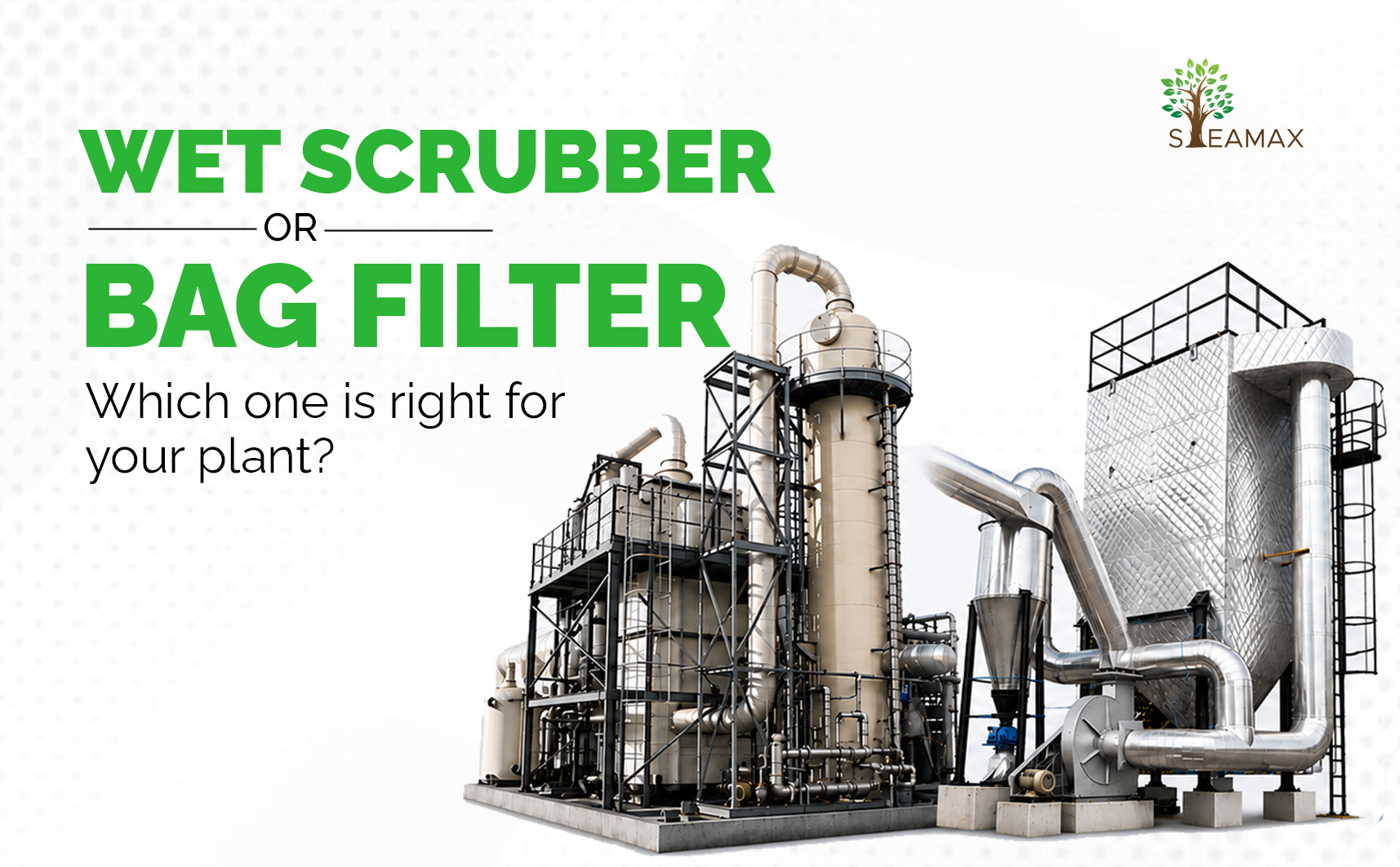
Industries today face increasing pressure to control emissions efficiently while also managing operating costs and compliance requirements. Among the most commonly used Air Pollution Control Devices (APCDs), wet scrubbers and bag filter are among the preferred solutions for industrial emission control.
But many industries still struggle with one question:
Which system is better for my application?
The answer depends on several factors, such as:
- Type of pollutant
- Dust characteristics
- Gas temperature
- Water availability
- Operating cost expectations
Understanding how both systems work helps industries choose the right solution rather than invest in the wrong technology.
What Is a Wet Scrubber?
A wet scrubber removes pollutants by bringing polluted gas into contact with water or another scrubbing liquid.
As the gas passes through the system:
- Dust particles become wet and heavier
- Pollutants get trapped in liquid droplets
- Contaminants are separated from the gas stream
Wet scrubbers are commonly used in industries where both particulate matter and gaseous pollutants need to be controlled.
What Is a Bag Filter?
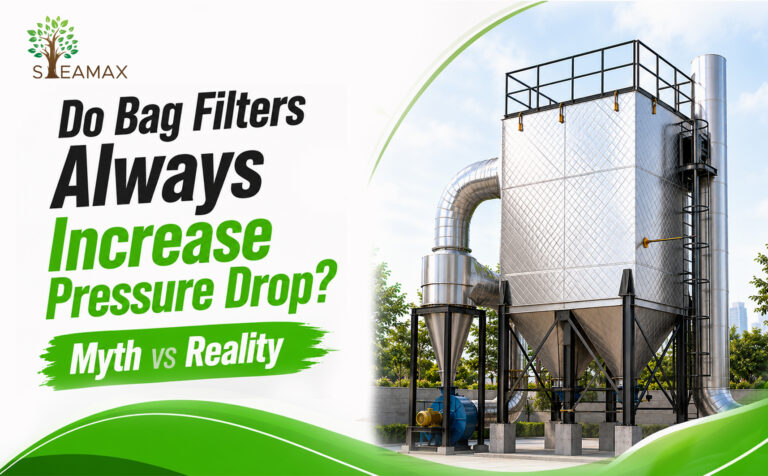
A bag filter, also called a fabric filter, works by passing flue gas through specially designed filter bags. The bags capture dust particles while allowing clean gas to pass through.
Over time, dust accumulates on the bags’ surfaces and is periodically removed using pulse-cleaning systems.
Bag filters are widely used for dry dust collection applications requiring very high particulate removal efficiency.
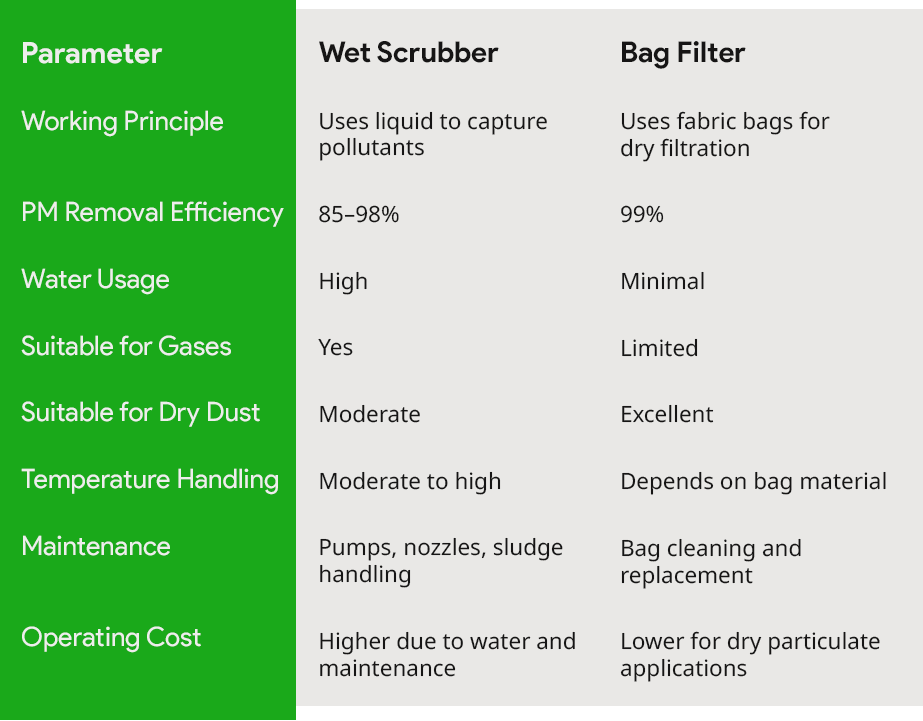
Wet Scrubber vs Bag Filter: Understanding the Key Differences
1. Working Principle
Wet Scrubber
Wet scrubbers use liquid-based cleaning.
The polluted gas comes into contact with water sprays, venturi sections, or scrubbing chambers where contaminants are absorbed or captured.
Best suited for:
- Sticky dust
- Acidic gases
- Moist or corrosive emissions
Bag Filter
Bag filters use dry filtration technology.
Dust-laden gas passes through fabric bags that trap particulate matter on the surface.
Best suited for:
- Dry particulate matter
- Fine dust collection
- High PM removal applications
2. Particulate Matter (PM) Removal Efficiency
Wet Scrubber Efficiency
Wet scrubbers provide moderate to high particulate removal efficiency depending on design.
Typical efficiency:
- Around 85–98% for particulate removal
They perform well for larger particles and mixed pollutants but may struggle with extremely fine dry particulate matter.
Bag Filter Efficiency
Bag filters are known for extremely high PM removal efficiency.
Typical efficiency:
- Often 99% or higher
They are highly effective in controlling:
- Fine dust
- Fly ash
- Biomass ash
- Industrial particulate emissions
For strict PM emission norms, bag filters are usually preferred.
3. Water Usage
Wet Scrubber
Water is essential for scrubber operation.
This means industries must consider:
- Continuous water consumption
- Effluent treatment requirements
- Sludge handling
In regions with water scarcity, this can become a major operational concern.
Bag Filter
Bag filters operate as dry systems and require virtually no water during normal operation.
It makes them more suitable for:
- Water-sensitive industries
- Dry process applications
- Areas with limited water availability
4. Temperature Limitation
Wet Scrubber
Wet scrubbers can handle relatively high gas temperatures, but excessive temperature may lead to:
- Rapid evaporation
- Corrosion issues
- Reduced efficiency
In many cases, gas cooling may still be required.
Bag Filter
Bag filters have clear temperature limitations because filter bags can get damaged at very high temperatures.
Typical operating temperature depends on bag material:
- Standard bags: lower temperature range
- Special high-temperature bags: higher resistance
If gas temperature exceeds safe limits, spark arrestors or cooling arrangements may be necessary.
5. Operating Cost
Wet Scrubber Operating Cost
Wet scrubbers usually involve:
- Higher water usage
- Pump operation costs
- Sludge disposal expenses
- Corrosion-related maintenance
Operating costs can increase significantly over time if water treatment is involved.
Bag Filter Operating Cost
Bag filters mainly involve:
- Fan power consumption
- Compressed air usage
- Periodic bag replacement
For dry dust applications, bag filters are often more energy-efficient and easier to maintain.
Which System Is Better for Biomass Boilers?
For biomass-fired boilers, the choice depends on fuel type and emission characteristics.
Bag Filters Are Commonly Preferred For:
- Fine biomass ash
- Strict PM emission norms
- Dry particulate removal
- High-efficiency dust collection
Wet Scrubbers May Be Used When:
- Gas cooling is required
- Sticky pollutants are present
- Mixed gaseous contaminants need treatment
In many industrial systems, the final decision depends on:
- Fuel chemistry
- Ash characteristics
- Regulatory requirements
- Water availability
The Real Question Industries Should Ask
Instead of asking:
“Which system is better?”
Industries should ask:
“Which system is better for my process conditions?”
Because the wrong APCD selection can lead to:
- High operating costs
- Poor emission control
- Frequent maintenance
- Compliance issues
Final Thoughts
Both wet scrubbers and bag filters are effective pollution control systems when applied correctly.
- Wet scrubbers are suitable for handling gases, sticky particles, and moisture-heavy applications.
- Bag filters are ideal for high-efficiency dry particulate removal, especially in biomass and boiler systems.
The right selection depends on understanding your:
- Fuel
- Flue gas characteristics
- Compliance targets
- Long-term operating strategy
To explore efficient APCD solutions for industrial boilers and emission systems, visit: www.steamaxindia.com