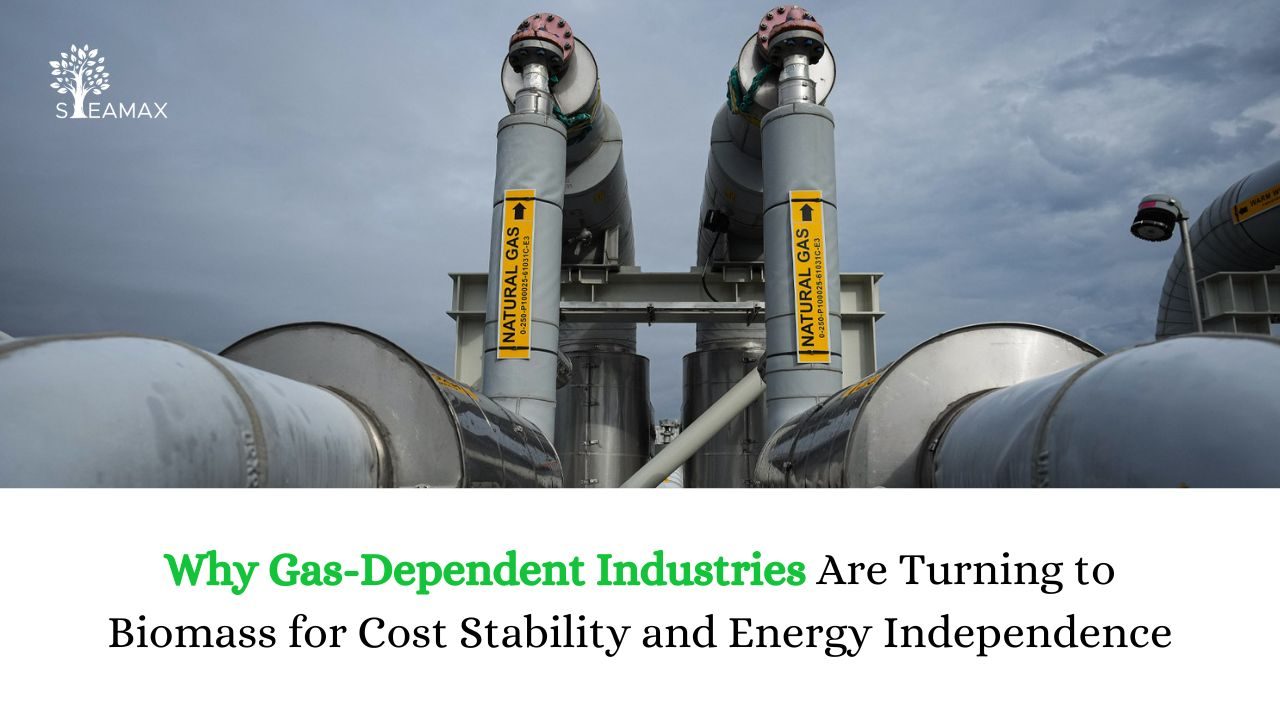
Across India, several industries — from food processing and chemicals to textiles and pharmaceuticals — rely heavily on natural gas (PNG/LPG) for their boiler and process heating needs. However, in recent years, many of these industries have found themselves in a financial bind, not solely due to rising fuel prices, but also because of a hidden provision in their supply contracts — the “minimum guaranteed offtake” clause. This clause sounds harmless at first. It ensures the gas supplier’s profitability by guaranteeing a minimum monthly purchase volume. The problem? You pay for the gas whether you use it or not.
For industries with seasonal demand, maintenance shutdowns, or fluctuating production volumes, this clause can quietly drain lakhs — even crores — every year.
The Hidden Cost of Minimum Offtake Agreements
1. Paying for Unused Fuel
If your plant operates at half capacity, you still incur the full cost of the contracted gas volume. This inflates production costs and eats directly into profit margins.
2. Exposure to Global Price Volatility
Gas prices are tied to international energy indices and fluctuate in response to global oil, PNG and LNG markets. A conflict halfway around the world can impact your production costs overnight.
3. Foreign Exchange Risk
Since natural gas is largely imported, currency fluctuations or trade disruptions can make prices unpredictable, particularly during periods of economic instability.
4. Lack of Price Visibility
Gas prices often fluctuate on a quarterly or even monthly basis, leaving plant managers and finance teams unable to accurately forecast energy costs — a significant issue for long-term contracts or export-oriented operations.
The Biomass Advantage: Freedom, Flexibility, and Future-Readiness
Industrial biomass systems are fast emerging as a cost-stable and regulation-compliant alternative to PNG/LPG boilers. Beyond being renewable, biomass offers a level of financial and operational freedom that gas-dependent industries can’t match.
1. No Minimum Offtake Obligation
Unlike gas contracts, biomass-based systems come with complete operational flexibility. You only pay for what you consume — no penalties, no locked-in volumes, no unused fuel charges.
2. Massive Cost Savings
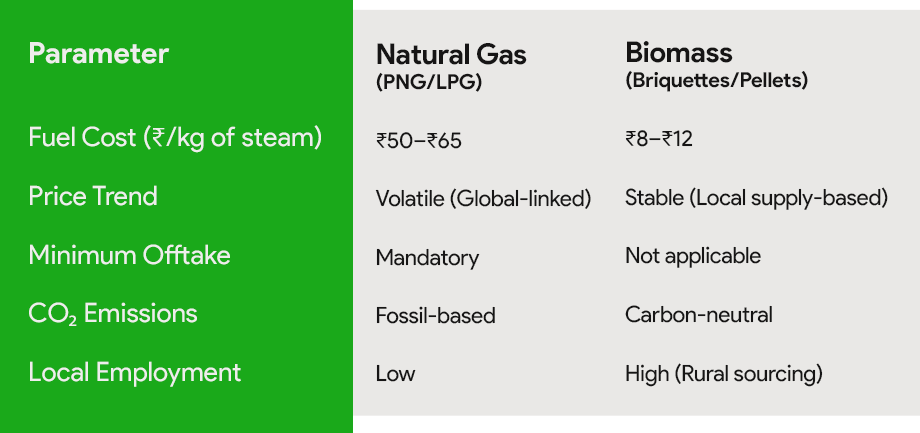
Switching from PNG/LPG to biomass can cut fuel costs by up to 40%. On average, industries save ₹6–₹10 per kg of steam, leading to monthly savings in the range of ₹10–₹30 lakhs, depending on scale.
3. Locally Sourced, Stable Pricing
Biomass fuels — including briquettes, pellets, and agro-waste — are locally available and not subject to the volatility of international markets. Prices remain relatively steady year-round, ensuring predictable energy budgets.
4. Supports Rural Economies
By sourcing fuel locally, industries contribute to rural employment and circular economies. Every ton of biomass fuel consumed helps generate income for farmers and small-scale suppliers.
How Steamax is Empowering the Shift to Biomass
At Steamax, we help industries transition from gas-based systems to biomass heating solutions through modular, efficient, and cost-effective setups.
Our key offerings include:
- OBR Series Biomass Retrofit Kits: Convert your existing PNG/LPG boiler to biomass quickly — without replacing your entire system.
- Fully Automated Feeding Systems: Maintain consistent combustion and minimise manual errors.
- Pollution control devices, such as bag filters, cyclones dust collectors and electrostatic precipitator are used to ensure compliance with national emission standards.
- OPEX Model – Steam at Cost: Enables you to transition to biomass without incurring upfront capital investment, paying only for the steam generated.
With proven technology and local fuel integration, Steamax enables industries to achieve cost stability, compliance, and carbon reduction simultaneously.
Why the Time to Switch is Now
Industries dependent on gas can no longer afford the uncertainty of volatile pricing. With biomass, they gain control — operational, financial, and environmental. By transitioning to a locally sourced, stable, and compliant fuel system, manufacturers can achieve predictable costs, increased profitability, and genuine energy independence.
Explore how Steamax’s biomass retrofit and OPEX models can help your plant break free from gas dependency.