

Boilers are fundamental components in many industrial operations, playing a crucial role in processes such as heating and power generation. However, not all boilers are created equal. This blog delves into the world of boilers, focusing on the distinctions between IBR (Indian Boiler Regulation), Non-IBR, and SIB (Small Industrial Boiler) boilers, helping you make informed decisions for your industrial needs.
What Are Boilers?
A boiler is a close vessel design to hold and heat water, producing steam for various applications, including power generation, heating, and industrial processes. Boilers come in various types, shapes, and sizes, each tailored to specific operational requirements.
Types of Boilers:
1. Non-IBR Boilers
Non-IBR boilers are not governed by the Indian Boiler Regulation (IBR). These boilers are steam-producing vessels with a volumetric capacity of fewer than 25 litres or a pressure below 1 kg/cm². Non-IBR boilers are often used in smaller industrial setups and commercial spaces where strict adherence to IBR standards may not be necessary.

Advantages:
- Flexibility: Non-IBR boilers offer more flexibility in design and construction.
- Cost-Effectiveness: They are generally more accessible and cheaper to install and maintain.
- Adaptability: Suitable for a range of applications with varying operational requirements.
Disadvantages:
- Limited Design: Typically restricted to coil-type designs.
- Water Quality Sensitivity: Requires meticulous water quality maintenance.
- Lower Efficiency: Often less efficient compared to IBR boilers.
Capacity: Up to 700 kg/h for biomass and 850 kg/h for diesel/gas.
2. SIB Boilers:
Small Industrial Boilers (SIB) are design for smaller industries and applications. They have a water holding capacity between 25 and 500 liters and operating pressures below 7 kg/cm².
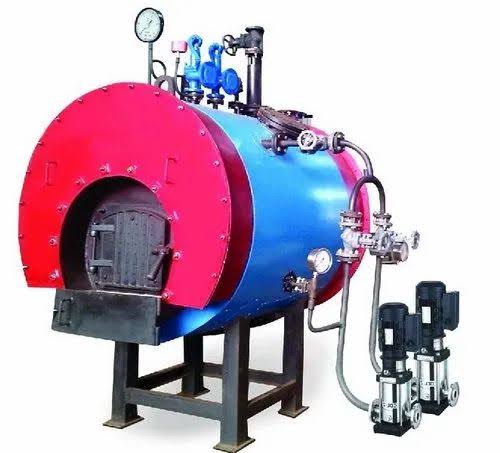
Advantages:
- Compact and Portable: Ideal for small-scale operations requiring mobility.
- Efficiency and Reliability: Despite their size, SIB boilers deliver impressive performance.
Disadvantages:
- IBR Approval Needed: These boilers require IBR certification and a certified operator.
- Higher Heat Transfer Efficiency: Offers better heat transfer and fuel flexibility than non-IBR boilers.
Capacity: Up to 500 kg/h for biomass and 600 kg/h for diesel/gas.
3. IBR Boilers:
The Indian Boiler Regulation defines IBR boilers as closed vessels exceeding 25 liters in capacity. These boilers are subject to strict regulations to ensure high safety and efficiency standards.

Advantages:
- Fuel Flexibility: Capable of handling a wide range of fuels.
- Optimal Efficiency: Designed for maximum fuel efficiency and heat transfer.
- Adaptability: This can be tailored for various capacities and pressure requirements.
Disadvantages:
- Mandatory Certification: Requires IBR certification, a certified operator, and specific piping.
- Higher Costs: Typically more expensive regarding initial investment and compliance requirements.
Capacity: Virtually limitless, making them suitable for high-demand industrial applications.
Verdict:
Selecting the right boiler for your industrial or commercial operation is a critical decision that hinges on several key factors:
- Pressure Requirement
Your operation’s pressure requirements are crucial in determining the appropriate boiler. IBR boilers are ideal for industries needing high pressure for power generation or process heating. On the other hand, SIB and non-IBR boilers are more suitable for low-pressure applications like heating and smaller-scale industrial processes.
- Steam Load
Assessing your operation’s steam load is essential. Steam load refers to the steam required to maintain seamless and efficient operations. Therefore, if your steam load is below 800 kg/h, both Non-IBR and SIB boilers may be suitable. For higher steam loads, IBR boilers are the preferred option.
- Fuel Availability
Different boilers can be designed to run on various fuels, including natural gas, diesel, coal, biomass, or even a combination of these. Non-IBR boilers typically run on fuels like diesel, gas, FO, biomass pellets, and Astillas. SIB and IBR boilers, however, can handle a greater variety of biomass fuels, including briquettes, wood chips, rice husk, and more. When deciding on a boiler, consider fuel availability, cost, and environmental impact to ensure efficient operation.
Conclusion:
Thus, choosing the correct boiler is a delicate balance between meeting your operational requirements, maximizing efficiency, and managing costs. Non-IBR, SIB, and IBR boilers each offer unique advantages and challenges. So, by understanding these nuances and aligning them with your operational needs, you can optimize your industrial processes for greater efficiency and sustainability.
Feeding kit
This article provides a clear and insightful overview of boiler types, their advantages, and applications.
The detailed comparison between Non-IBR, SIB, and IBR boilers is particularly useful for industries evaluating their specific needs.
Highlighting factors like pressure requirements, steam load, and fuel availability helps make informed decisions.
A great resource for understanding boilers and optimizing industrial processes!
Thanks for feedback.
Good information
Thanks for your feedback.
very well explained article. now i know the difference
Thanks for feedback.
This article offers a clear and insightful overview of various boiler types, highlighting their advantages and applications.
Thank you for this post, this post is very informative for me. I understand all the things that i need. digital marketing course in delhi
Thanks for feedback.
Great guide, thanks for sharing it.
Thanks for feedback.
This article provides a well-explained overview of different boiler types, along with their benefits and practical uses.
Thank you so much.
This is post very usefully me. digital marketing agency in noida
Thank you so much.
This article provides a helpful overview of boiler classifications and their industrial applications. The comparison between Non-IBR and SIB boilers clearly highlights their features, advantages, and limitations, making it easier for businesses to select the right solution. Understanding these distinctions is essential for ensuring operational efficiency, regulatory compliance, cost optimization, and safe performance in industrial environments.
Thank you so much.